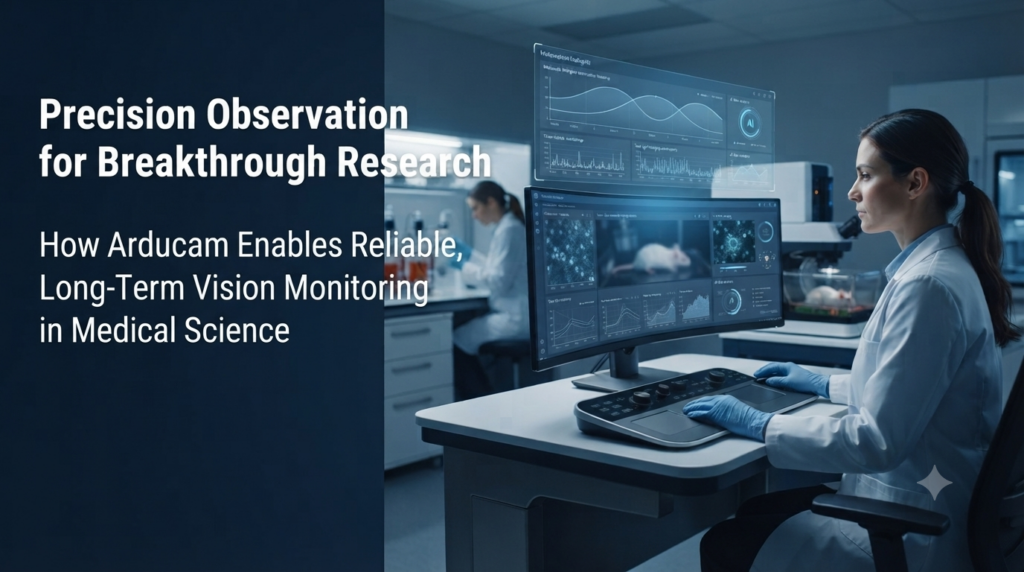
In the demanding field of pre-clinical medical research and behavioral science, observing small animals (such as mice and rats) is foundational to breakthrough discoveries. From tracking behavioral phenotypes to evaluating therapeutic drugs, researchers rely heavily on continuous, high-fidelity visual data. However, translating delicate, laboratory-scale observations into reliable long-term data comes with severe technical hurdles.
Recently, Arducam celebrated a major milestone built upon years of close, collaborative partnership with a leading medical research client. By actively listening to their requirements, maintaining regular communication, and providing dedicated hardware and software platform adaptation, Arducam helped them overcome persistent imaging barriers—turning a complex research challenge into a streamlined, long-term monitoring success.
1. The Research Bottleneck: Three Core Challenges in Small Animal Observation
While monitoring small animals is vital for medical science, the living subjects and experimental environments present unique constraints that traditional laboratory cameras struggle to handle:
- Low-Light Environments (Night-Time/Dark Cycles): Many circadian rhythm and behavioral studies require monitoring subjects during dark cycles or under deeply dimmed lighting to mimic natural rest states without disturbing the animals. Standard cameras are instantly blinded by these conditions.
- Day & Night Continuous Monitoring: Researchers need seamless, uninterrupted 24/7 vision systems that can instantly transition between high-visibility daylight observation and sensitive night-time recording without manual intervention.
- High-Speed Motion Capture: Although laboratory subjects are small, their movements (such as sudden darts, grooming, or behavioral flinches) are exceptionally fast. Standard cameras suffer from motion blur, masking critical behavioral data.
2. Collaborative Innovation: How Arducam Delivered a Tailored Solution
Solving these multi-layered research challenges required more than off-the-shelf hardware; it demanded a collaborative engineering approach. Through continuous communication and dedicated support, Arducam worked hand-in-hand with the client to build an optimized observation ecosystem:
- Active Collaboration & Platform Adaptation: Arducam’s engineering team actively listened to the client’s evolving research demands, providing regular, iterative communication and actively supporting the client with specialized camera hardware and software platform adaptation.
- Superior Low-Light Sensitivity: Leveraging advanced sensor technologies (incorporating ultra-sensitive pixels capable of capturing clear imagery in near-total darkness), the cameras pull sharp, intelligible data from deeply dimmed laboratory environments.
- Effortless Day & Night Transition: The deployed systems provide crystal-clear visibility around the clock, automatically adapting to shifting ambient lab illumination to ensure uninterrupted 24/7 data pipelines.
- Crisp Motion Tracking: Built-in high frame rate support and fast shutter responsiveness freeze the rapid movements of small subjects, eliminating blur and capturing every micro-behavior accurately.
3. Realized Impact: Powering Multi-Dimensional Medical Research
Through years of sustained technical collaboration and iterative optimization, the deployed Arducam vision framework successfully achieved the client’s core research objectives across multiple dimensions:
- Small Animal Behavior Monitoring: Unlocked high-precision tracking of natural movements, social interactions, and behavioral anomalies over extended periods.
- Laboratory Observation & Continuous Health Monitoring: Enabled non-invasive, 24/7 observation of subjects, ensuring continuous health tracking without inducing stress or altering behavior.
- Circadian Rhythm Research: Facilitated uninterrupted, long-term dark-cycle monitoring, giving researchers precise data on rest-activity cycles.
- Therapeutic Drug Evaluation: Provided reliable, distortion-free visual metrics required to accurately assess how pharmaceutical interventions affect motor skills and physiological recovery.
4. Product Spotlight: Arducam Low-Light Camera Series
The cornerstone of this successful multi-year partnership is Arducam’s specialized Low-Light Camera Series. Designed specifically for light-starved and research-critical environments, these cameras focus purely on exceptional night-vision performance and high-sensitivity optical clarity.
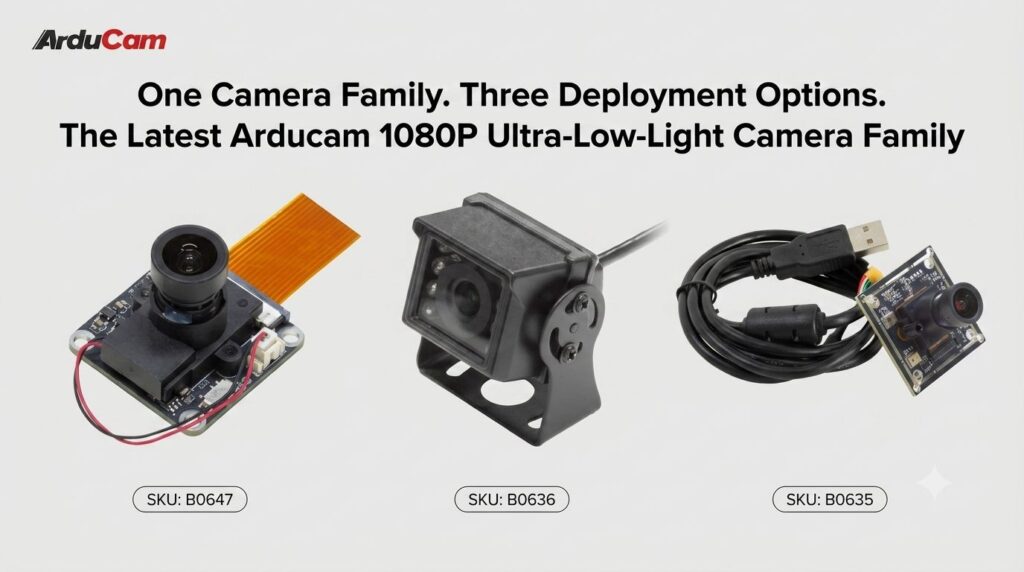
Key Technical Advantages:
- Advanced Low-Light Performance: Harnessed from cutting-edge ultra-low-light sensor technology (such as advanced Sony low-light architectures focusing on exceptional quantum efficiency), these modules capture vivid, low-noise details where standard cameras fail.
- Research-Grade Versatility: Engineered for seamless integration into custom laboratory rigs, supporting diverse software platforms and long-term continuous operation.
- Uncompromised Clarity: Delivers sharp, high-contrast imagery day and night, ensuring that every frame counts toward critical medical conclusions.
Looking for a customized, reliable vision partner to take your medical research or laboratory monitoring from prototype to long-term success? 👉 [Visit our Official Arducam Low-Light Camera Product Page] (Link) to explore our sensor options, or reach out to our engineering collaboration team today.