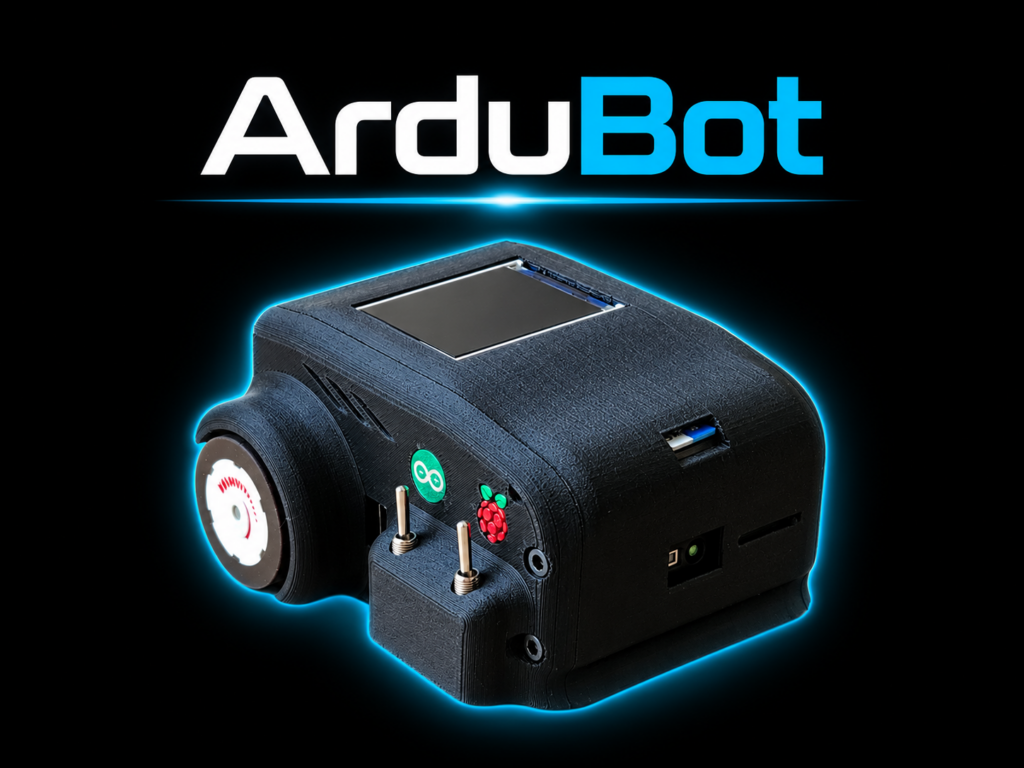
When building an autonomous mobile robot, engineers often face a tough trade-off: how to pack rich spatial perception and mapping capabilities into a tiny, cost-effective form factor. Meet ArduBot—an open-source, differential-drive mobile robot measuring just 100 × 100 × 50 mm, yet fully capable of 2D SLAM and 3D environment reconstruction.
Developed by jled12, this palm-sized robot shows that high-end robotics concepts like ROS 2 navigation, OctoMap 3D mapping, and ToF-based sensing can scale down to a miniature, maker-friendly platform.
What Makes ArduBot Tick?
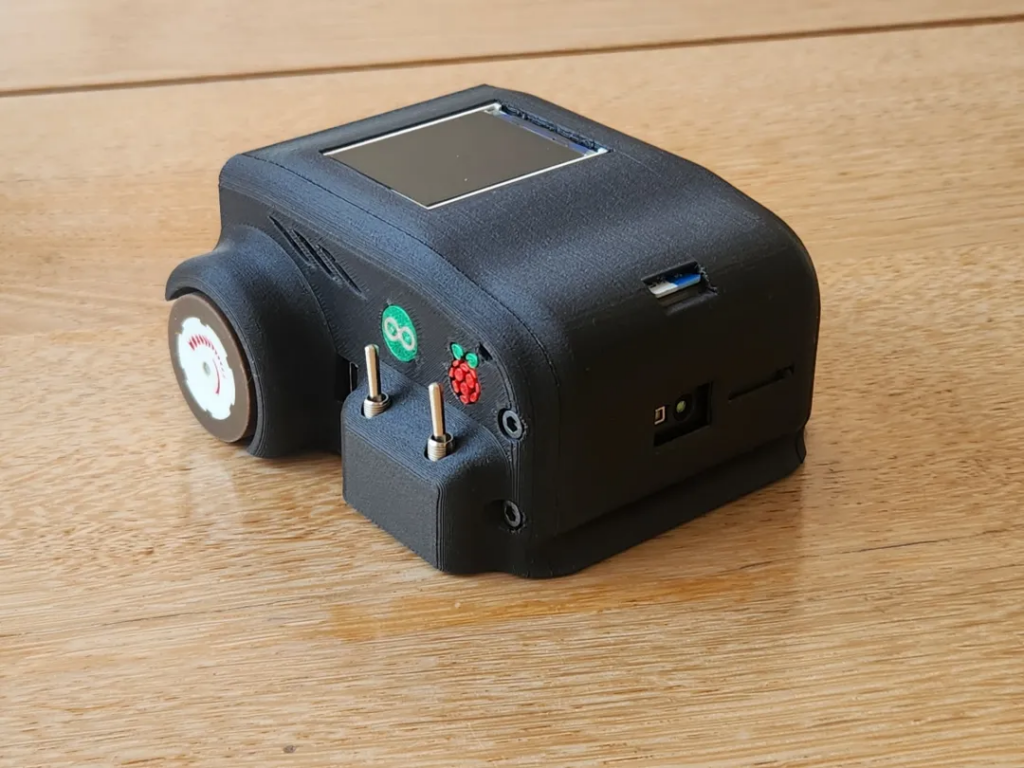
Despite its compact size, ArduBot integrates a robust hardware and software stack designed for real-time spatial awareness:
Hardware Stack:
- Arducam ToF (Time-of-Flight) Camera: Acts as the primary depth sensor, capturing rich 3D depth data across the field of view. (Want to know more product details about the Arducam ToF camera? Click here.)
- Raspberry Pi 4 Model B: Handles ToF data acquisition and processing, plus ROS 2 node communication.
- Arduino Pro Mini (via Arduino Dagu Magician): Manages low-level motor control, wheel encoder feedback, and IMU data collection.
- BNO055 IMU & Wheel Encoders: Provide precise orientation and odometry data.
- ST7735 TFT Display: Gives status readouts directly on the chassis.
Software & ROS 2 Architecture:
ArduBot leverages a distributed computing model using ROS 2 Humble:
- Onboard (Raspberry Pi & Arduino): Gathers sensor data, controls motors, and bridges telemetry via Wi-Fi using ROS 2 domain bridging and Chrony time synchronization.
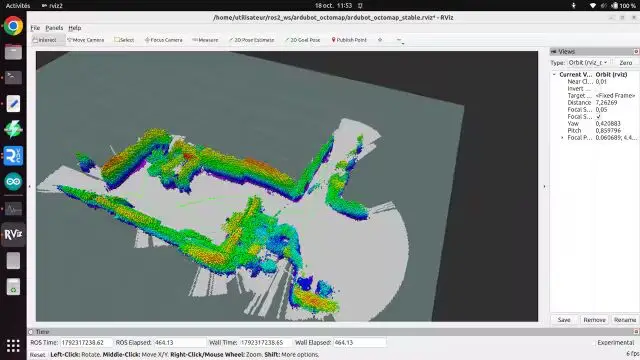
- Offboard (Remote PC): Heavy computations—including SLAM Toolbox for 2D grid mapping, Nav2 for path planning, and OctoMap for 3D volumetric mapping—are handled smoothly on a host machine, visualized in RViz.
Bridging 2D Navigation and 3D Perception with ToF
One of the standout features of ArduBot is its clever use of the Arducam ToF camera for dual-purpose mapping:
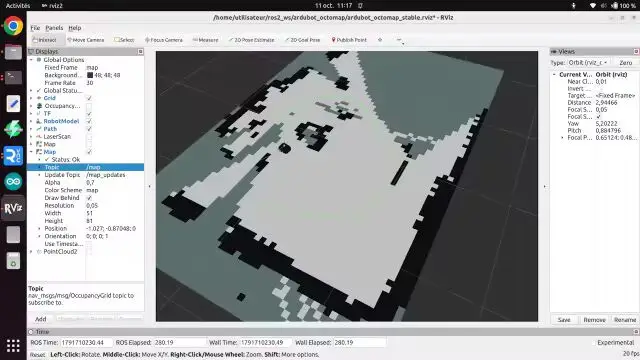
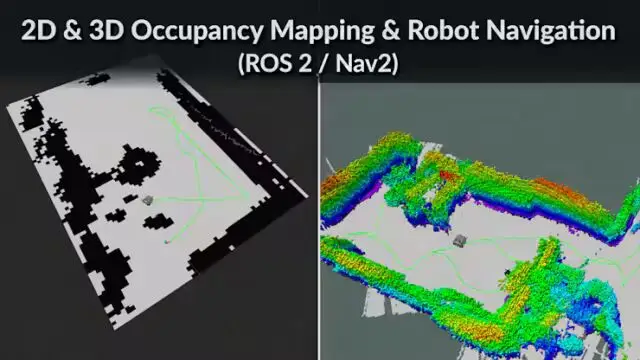
- 2D Occupancy Grid Mapping: Depth data is converted into laser-scan-like formats, allowing SLAM Toolbox to incrementally build clean 2D floor plans that feed directly into Nav2 for autonomous navigation.
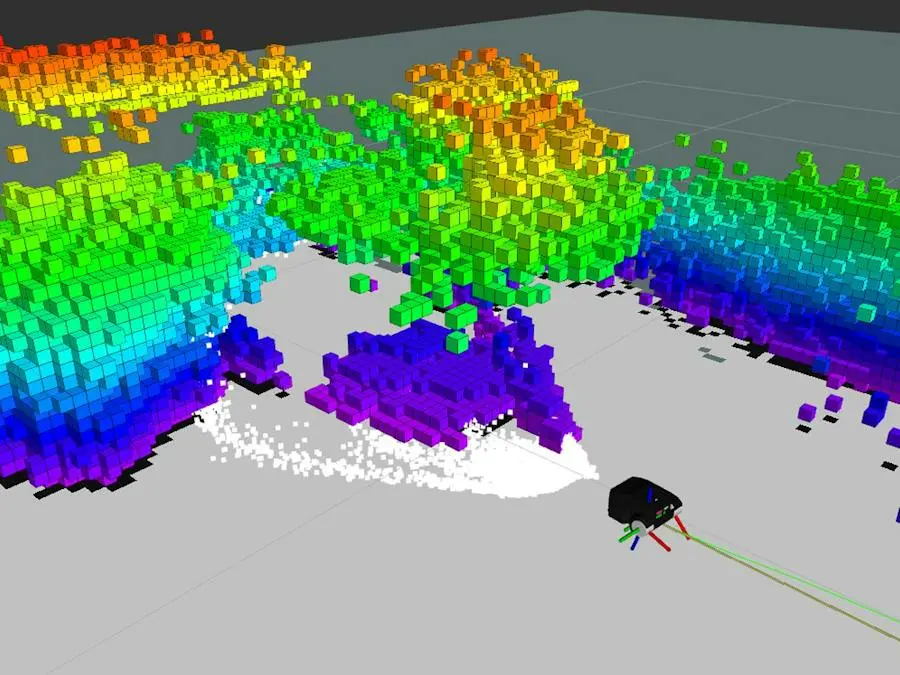
- 3D Environment Reconstruction: Unlike traditional 2D LiDAR scanners, the compact Arducam ToF sensor captures a full matrix of depth values. These are translated into 3D point clouds and integrated into OctoMap, generating colorful multi-level volumetric models of obstacles, walls, and furniture.
Get Involved & Build Your Own
ArduBot is completely open-source. Whether you are a robotics student, a researcher, or a hardware enthusiast looking to experiment with ROS 2 and depth sensors, you can dive straight into the code, circuit diagrams, and 3D-printable chassis files.
- GitHub Repository: ArduBot-ToF-SLAM on GitHub