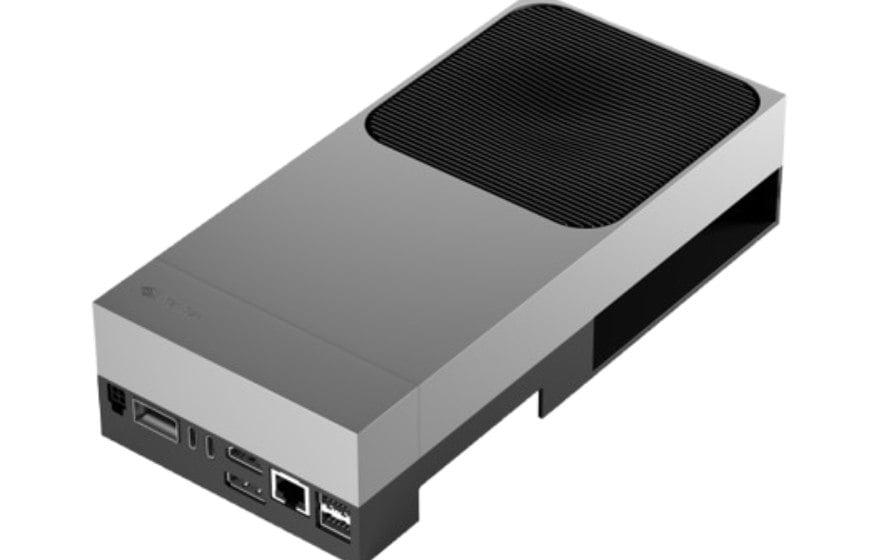
NVIDIA Jetson AGX Thor
Embedded / edge
Validated8x GMSL2 in. Dual 10G SFP+ out. Synchronized and low latency.
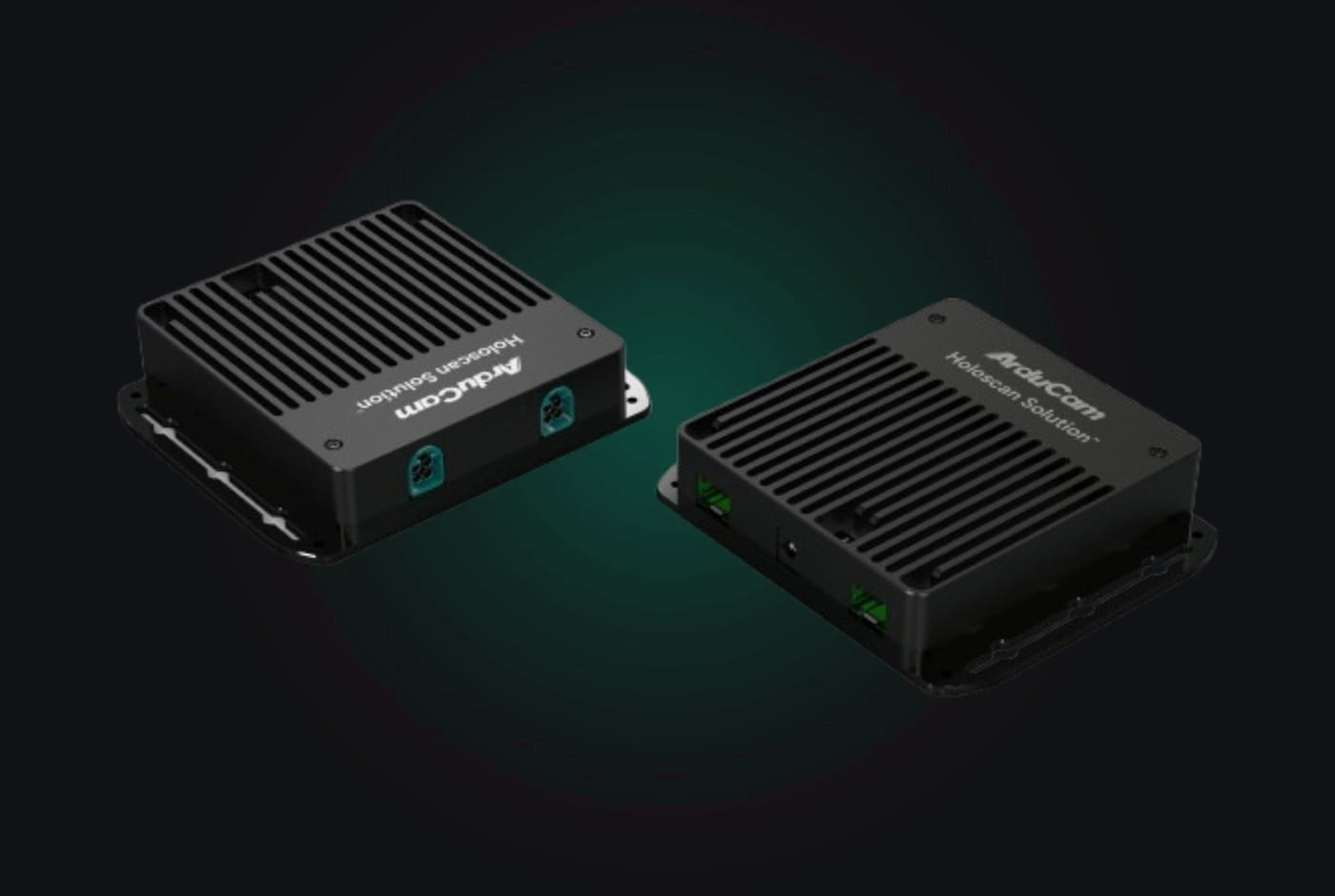
Arducam Holoscan Multi-Camera Solution bridges up to 8x GMSL2 vision sensors directly into the NVIDIA Holoscan ecosystem. Utilizing the NVIDIA Holoscan Sensor Bridge (HSB) protocol over Dual 10G SFP+ optical links, it delivers hardware-synchronized, millisecond-level latency, with a link reach of up to 15 m over GMSL coax and more than 100 m over 10G SFP+ optical links to the host. Engineered for Embodied AI, humanoid robotics, and high-concurrency perception systems, it offers native compatibility with NVIDIA Jetson AGX Thor, IGX, Jetson AGX Orin, and DGX Spark.
A full-stack platform that unifies sensor-to-GPU streaming, a modular software stack, edge-to-cloud scalability, and production-grade tooling for real-time edge AI.
Deterministic pipelines for time-critical AI tasks.
Sustain heavy multi-stream throughput for real-time decision making.
The Holoscan Sensor Bridge integrates diverse sensor data directly into the GPU for low-latency, synchronized, real-time AI processing.
gPTP / IEEE 802.1AS time synchronization aligns all connected sensors for tightly synchronized, jitter-free data — a foundation for 3D SLAM and spatial AI.
Python / C++ plug-and-play operators; low-code, reusable — saves months of low-level driver work.
One pipeline from Jetson → IGX → AGX / DGX, no code rewrite; built-in Triton and MONAI.
Supports a wide range of sensor types (MIPI, GMSL2/3, Ethernet) via software-defined configuration.
PCB-level reach (~30 cm), point-to-point, custom bridge/FPGA to scale.
Reliable for a few cameras, but scaling and vendor-proprietary PHY make multi-camera designs complex.
Sensor data hits CPU first → extra latency, OS jitter, CPU heat.
General-purpose stacks and cloud-centric inference often add latency or lack a unified sensor-to-GPU pipeline.
A unified platform combining all of the above — with guaranteed performance and faster time-to-market.
Two capabilities set Arducam apart in the Holoscan ecosystem — everything else is table-stakes we simply meet.
NVIDIA proved the architecture.
Arducam makes it deployable.
Engineering the bridge, the carrier, and the SDK so you ship perception — not prototypes.
Our core differentiator: 8× GMSL2 video inputs aggregated into dual 10G SFP+ optical outputs—delivering ~20 Gbps of raw bandwidth with hardware synchronization and 100m+ long-reach capability. High-bandwidth, extended-range GMSL2 aggregation is Arducam’s core strength, with a hardware design built to seamlessly scale to dual 25G SFP28 interfaces for next-generation workloads.
A broad, validated sensor portfolio (Sony, onsemi, OmniVision and more). Host-side I2C dynamic register configuration adds new sensors through software files — zero FPGA or hardware changes. You are not locked to a single sensor vendor.
FPGA + deserializer + carrier design; modular SoM/carrier decoupling enables fast, cost-effective customization.
IP67, industrial temperature range, 15 m long-reach coax, hardware-level synchronization.
An 8x GMSL2 + Dual 10G SFP+ HSB-compatible bridge that turns NVIDIA’s reference design into an engineered, productized, scalable solution.
Proof it runs: multi-camera perception, synchronized and low-latency, on the NVIDIA Holoscan stack.
Eight ISX031 cameras streamed concurrently through the Holoscan Sensor Bridge to a Jetson AGX Thor host — stable ~30 fps per channel, video output across all 8 cameras.
Demo library is being finalized — depth, SLAM and teleoperation recordings coming soon.
8x GMSL2 + Dual 10G SFP+, 20 Gbps raw bandwidth. Full-load multi-camera streams with no frame drops, and streaming offloaded from the host CPU.
Out-of-the-box integration with mainstream sensors. Host-side I2C dynamic configuration adds new sensors via software files — no FPGA / hardware changes.
Deterministic, time-sensitive streaming. FPGA hardware encapsulation and direct optical links offload streaming from the host CPU and software buffering for seamless teleoperation.
8 channels split into two 4-camera groups, externally triggered. Millisecond-to-microsecond alignment across all 8 cameras — jitter-free data for 3D SLAM and spatial AI.
Fully validated Linux drivers and native NVIDIA Holoscan SDK compatibility. Eliminates months of low-level driver development.
FPGA core SoM decoupled from the carrier board for fast, cost-effective customization (deserializer, interfaces, port density).
Sensor-to-GPU by design: eight GMSL2 sensors deserialize into the bridge FPGA, packetized by Hololink IP and streamed over dual 10G SFP+ optical links straight into NVIDIA GPU memory.
Validated sensor portfolio — example list, to be finalized.
| Sensor (Camera) | Resolution | Key Features | Output Format | Modes (pixel · FPS) | Status |
|---|---|---|---|---|---|
| Sony ISX031Automotive-grade | 3 MP |
| YUV422 (UYVY) | 1920×1536 · 30 | Example |
| Sony IMX900Global shutter | 3 MP |
| RAW10 | 2048×1552 · 30 | Example |
| Sony IMX477Stacked BSI | 8 MP |
| RAW10 | 3840×2160 · 202016×1520 · 201920×1080 · 60 | Example |
| Sony IMX219Wide compatibility | 2 MP |
| RAW10 | 1920×1080 · 20 | Example |
| Onsemi AR0234Stereo | 2.3 MP×2 |
| YUV422 (UYVY) | 3840×1200 · 302560×720 · 301280×480 · 100 | Example |
| OmniVision OX08B40Automotive | 8 MP |
| YUV422 (UYVY) | 3840×2160 · 30 | Example |
New sensors are added via host-side I2C register files — no FPGA or hardware changes required.
Native compatibility across the NVIDIA edge-to-data-center range.
Embedded / edge
Validated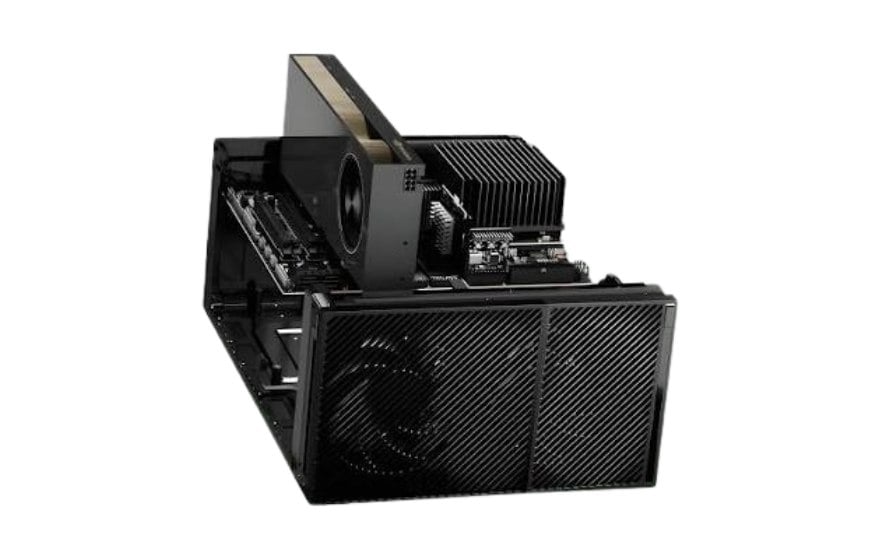
Industrial edge
Compatible — HSB reference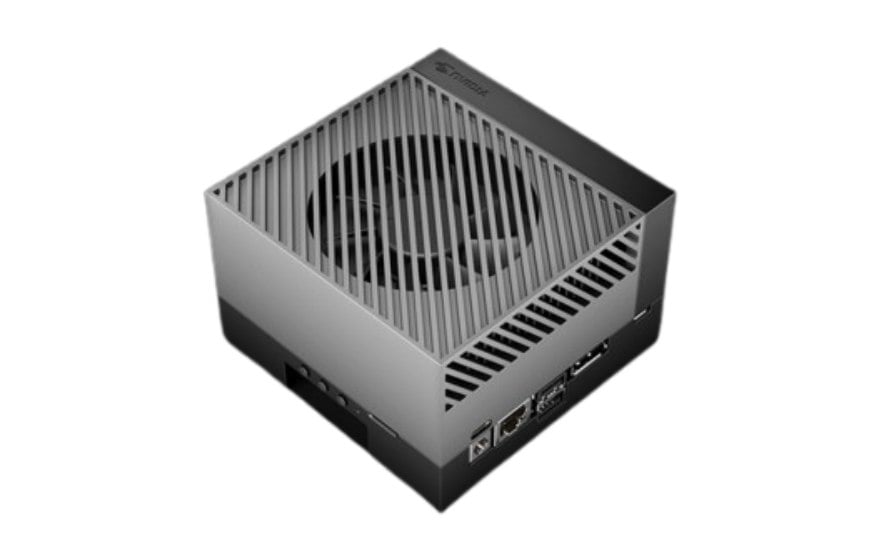
Embedded / edge · up to 275 TOPS
Compatible — HSB reference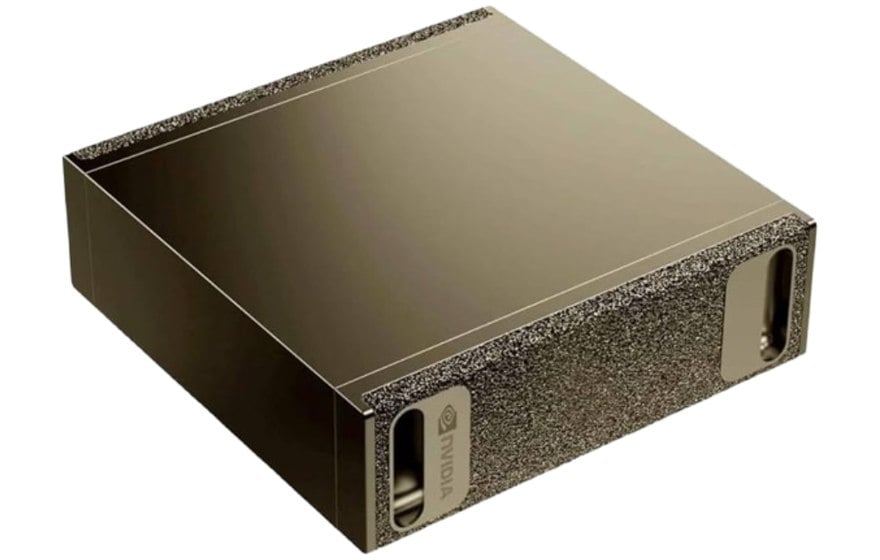
Desktop / data-center class
Compatible — HSB referenceIntegration layer: NVIDIA Holoscan Sensor Bridge (HSB) protocol over Dual 10G SFP+.
A validated foundation for the industries building the next generation of perception.

Multi-camera synchronized perception and low-latency teleoperation accelerate embodied-AI training and deployment.
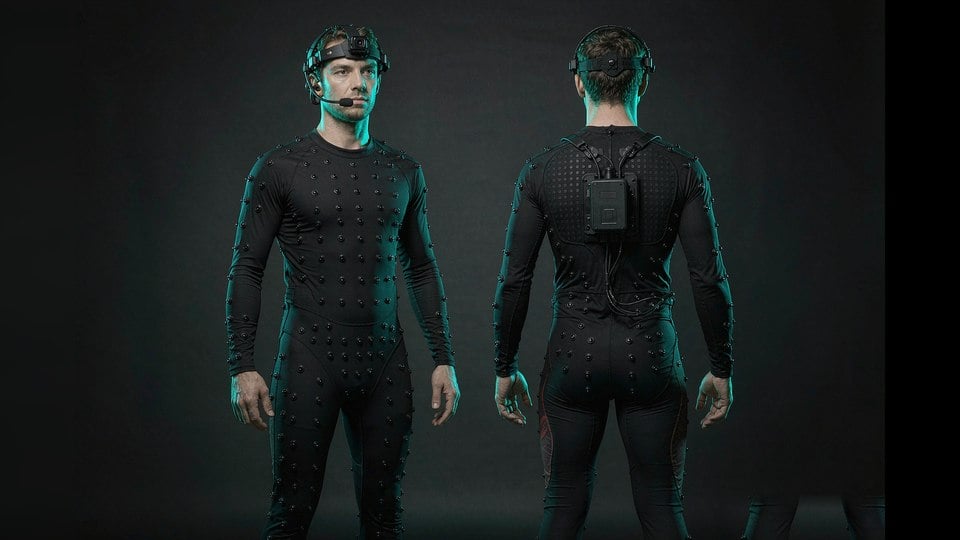
Long-reach 10G SFP+ optical links (up to 100 m) + hardware-synced multi-sensor capture enable large-scale, high-concurrency training-data collection and replay.
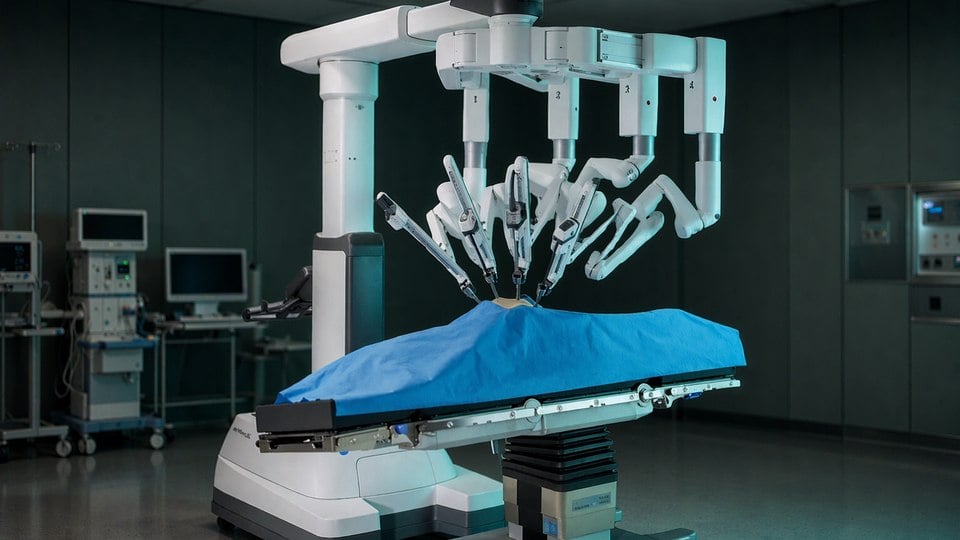
Hardware-level synchronization and a production-grade, safety-conscious software stack support medical-grade real-time control and imaging.
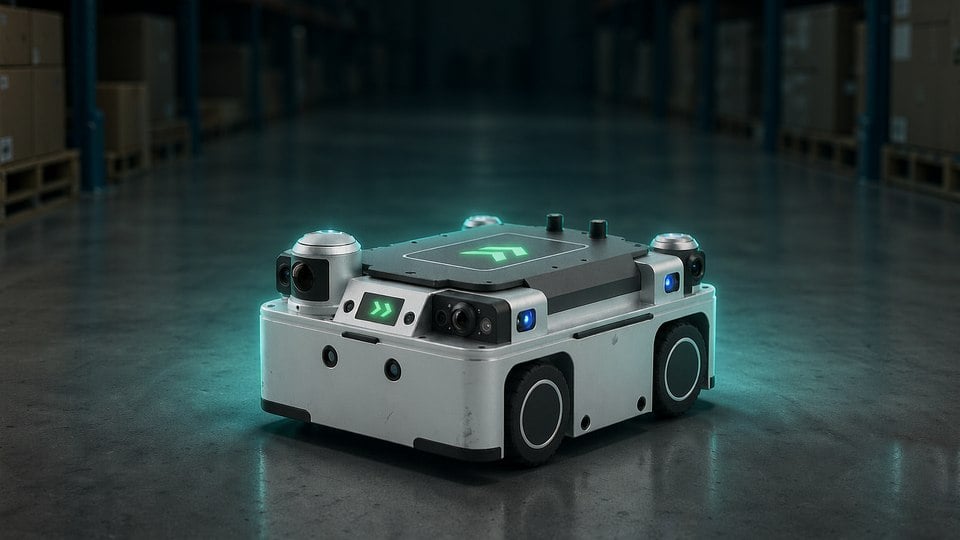
8-channel 360° awareness, IP67, 15 m reach for rugged AMR, warehouses, and outdoor inspection.
One validated reference design — de-risking adoption across robotics, data capture, and medical perception.
Engineering samples and customized carrier board development available upon request for qualification.
Full datasheet, mechanical drawings and bill of materials for the 8x GMSL2 sensor bridge.
Request DocumentQualify the bridge with your sensors and Holoscan pipelines on Jetson AGX Thor or IGX.
Apply NowArducam · Holoscan Multi-Camera Solution
Quick answers on the Holoscan Multi-Camera Solution — architecture, platforms, synchronization, and evaluation.
A validated sensor bridge that connects up to 8× GMSL2 vision sensors into the NVIDIA Holoscan ecosystem over dual 10G SFP+ optical links. Built on the NVIDIA Holoscan Sensor Bridge (HSB) protocol, it delivers hardware-synchronized, millisecond-level latency streaming with the data path offloaded from the host CPU — turning NVIDIA’s reference architecture into a deployable, productized solution.
Up to 8× GMSL2 inputs feeding 2× 10G SFP+ outputs — roughly 20 Gbps of raw bandwidth. The eight channels are split into two 4-camera groups with dual-group FSYNC for microsecond-level alignment across all sensors, with no frame drops and no host CPU overhead.
NVIDIA Jetson AGX Thor is fully Validated; IGX Orin, Jetson AGX Orin, and DGX Spark are supported via the HSB reference. The integration layer across all of them is the Holoscan Sensor Bridge protocol over dual 10G SFP+.
Up to 15 m over GMSL coax per camera, and more than 100 m over 10G SFP+ optical links to the host. That long reach makes it well suited to industrial, warehouse, and large-scale robotic deployments where the compute host sits far from the sensors.
Hardware-level time sync via gPTP / IEEE 802.1AS aligns all connected sensors to microsecond-level precision. Combined with dual-group FSYNC, this eliminates jitter for 3D SLAM, spatial AI, and precise multi-view reconstruction.
A growing portfolio including Sony ISX031, IMX900, IMX477, IMX219, onsemi AR0234, and OmniVision OX08B40. New sensors are added through host-side I2C register files — no FPGA or hardware changes required. (The full validated list is being finalized.)
Use the Request Evaluation options above — request the full hardware spec sheet, or apply for a DevKit to qualify the bridge with your own sensors and Holoscan pipelines on Jetson AGX Thor or IGX.
Simplifying Embedded Vision, Innovation Made Easy.
© Arducam · Holoscan Multi-Camera Solution Brief


Welcome to the Arducam Forum.
Here are our forum rules to comply with if you want to post a new topic:
The posting rules aim to help you better articulate your questions and be descriptive enough to get help.
Any topic that fails to comply with the posting rules will be unapproved starting from 11/11/2020.
This forum is public. If you prefer a private conversation with Arducam, go to our Contact Center.
If you need help with the Arducam products you’ve purchased, please include the following questions in your post and answer them to help us better understand your needs.